


Happy Monday, Ball-Knowers!
No Cap Wife and I had a lovely sojourn to Ellijay, Georgia for our anniversary and may I say, there are some gems in southern Appalachia. Surprisingly decent wine as well! It was a nice reprieve from the madness of the WNBA Playoffs, exit interviews and online discourse. But the bill always comes due, and the real world is always waiting on the other side of a weekend in the woods. Thankfully, it leaves us plenty to talk about this Monday (most of it fun in nature).
If you’ve been enjoying our Playoffathon over on YouTube, we hope you’re ready for the stretch run. Tyler, Greer and Chauny have been holding it down after every single evening of action, breaking down the results, analyzing the swings and what it all means in the greater context of the WNBA.
Meanwhile, the NCAA women’s basketball season is quietly creeping around the corner. Our first round of team previews and player profiles will start dropping as soon as tomorrow. From Notre Dame’s newest Ivy League transfer in Madison St. Rose to Iowa head coach Jan Jensen, we’ve got the guests you want and the content you crave. So tap in and get ready for the tsunami.
Now, onto the column!
What’s In Your Inbox This Week…
Tuesday: Notre Dame Team Preview // Luxury Tax Guest: Madison St. Rose
Wednesday: How Allisha Gray Built a Bond With A Young Dream Superfan
Thursday: Game 3 Recap from State Farm Arena
Friday: Iowa Team Preview // Luxury Tax Guest: Jan Jensen
In Case You Missed It…
Playoffathon Postgame: Game 1 of WNBA Semifinals
1. Atlanta, Even Without Allisha Gray, Feels Ready For The Moment
This time last year, the Atlanta Dream were wrapping up exit interviews and preparing for a gut check of an offseason. It was a good roster, able to rack up wins in the regular season, but did they have what was needed to overcome dynasties like Las Vegas or upstarts like Indiana? General Manager Dan Padover immediately went to work trying to answer that question. In a protracted, post-CBA free agency period, he managed to swing a trade that brought Angel Reese down south, drafted South Carolina center Madina Okot and pulled in DeWanna Bonner for one last ring chase (more on that in a moment). Okot provided depth in the frontcourt, Bonner added a championship pedigree and defensive versatility, while Reese injected her energy and intensity into a franchise that had all the talent but maybe a bit of a ‘Dawg’ deficiency.
There doesn’t seem to be a doubt now that Atlanta has the juice to not just make a trip to the WNBA Finals, but to win it.
I wrote about during the summer that the Dream’s success would be predicated on who emerged alongside Reese as a killer who wanted the ball in big moments. It appears that Jordin Canada, as well as Bonner, filled that role. Through the first three games of the playoffs, Canada is averaging 18 points, 8.3 assists, 3.7 rebounds and 3.3 steals on a scorching 47.1% from three point range.
Bonner, meanwhile, is averaging 14.3 points and 5 rebounds off the bench. Her 23 point, 9 rebound performance in Game One against New York was a masterclass that seemed to turn the clock back to 2014. As someone who doubted the move and wondered about the upside Bonner could provide to Atlanta, I have been continuously impressed by how much the 39 year old wing is making her impact felt. Beyond the box score, the calming veteran presence and championship mentality is clearly a value add for Atlanta, and Reese specifically.
I’ve learned to not call series’ over too early, and I know who is on the other side of this matchup. Breanna Stewart isn’t going to go quietly into the night. But if the knock on Atlanta, as recently as this year, is whether or not they have the composure to win in the high leverage moments, I’ve seen all I needed to see. The ‘Dawg’ is there. The only question is if they can win the tactical battles to get to the promised land.
2. The Young Guards Are Baptized By The WNBA Veterans
The guard revolution is still happening in the WNBA, but there’s something that any history buff knows: paradigm shifts very rarely happen overnight. In the world of women’s basketball, it’s actually quite rare for young guards to win championships without the help of one, or even two, dominant frontcourt options.
It took Diana Taurasi until year four to win a championship. It took her three years to even make it to the playoffs. Sue Bird held a trophy a little earlier, with the help of an all-time great in Lauren Jackson leading the Storm’s interior attack. Several potentially game-changing guards from Angel McCoughtry to Skylar Diggins never won a title, while other generational players like Courtney Vandersloot took a decade to hold up hardware. Even Chelsea Gray, the ‘Point Gawd’ herself, was something of a bit player on that 2016 L.A. Sparks team that was led by Candace Parker and Nneka Ogwumike.
In short, patience is a virtue when it comes to the backcourt. As Caitlin Clark, Paige Bueckers and Olivia Miles all were eliminated in the first round, I’ve caught up on a bit of dialogue that feels reminiscent of Michael B. Jordan’s Killmonger from Black Panther.
“Is this your King Queen?”
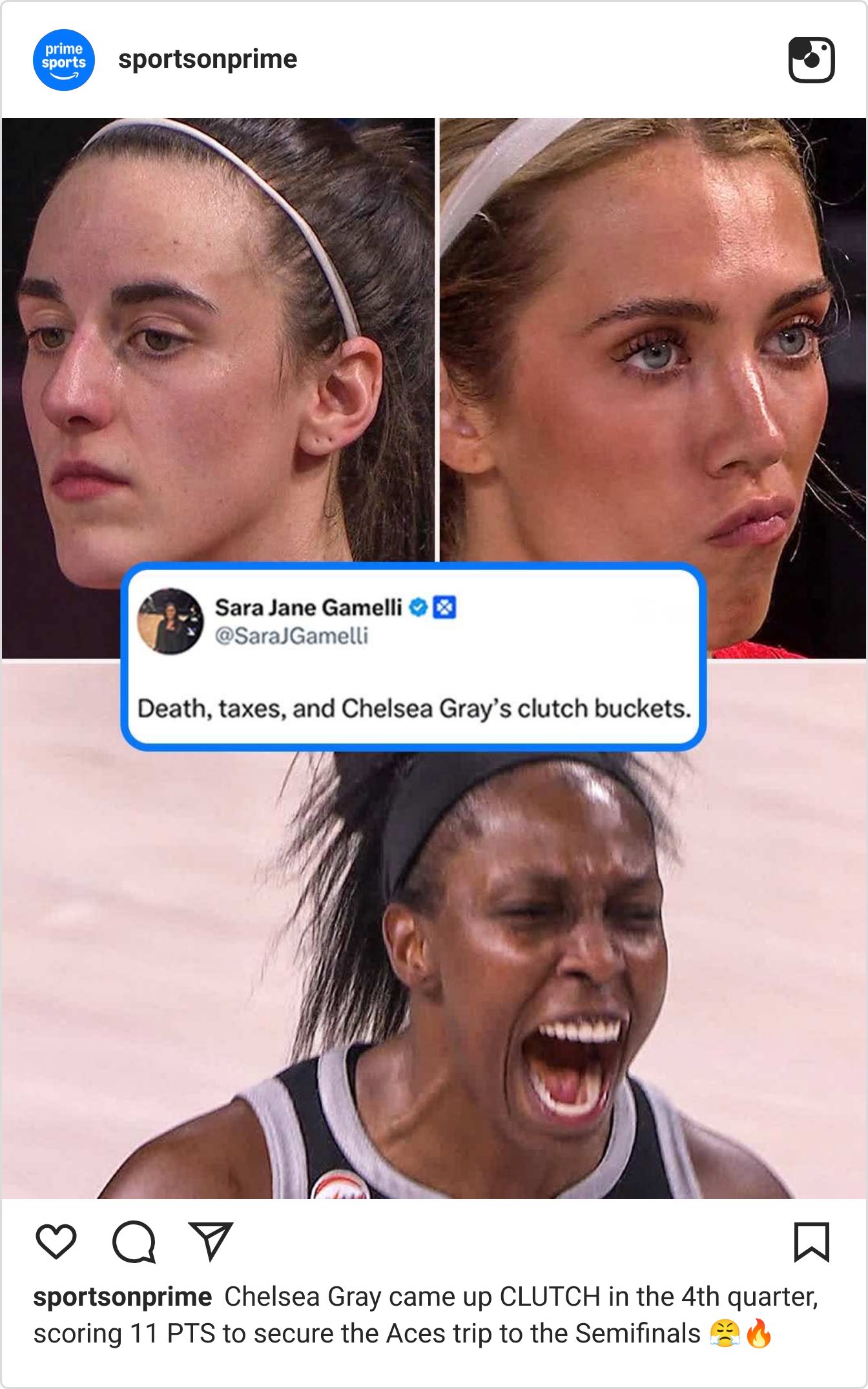
The reality of this league is that bigs usually progress and find success earlier than their backcourt counterparts. A’ja Wilson, Breanna Stewart, Lauren Jackson, Lisa Leslie, and others prove that hypothesis. Some of the best guards in the early WNBA were veterans in their late 20’s or even 30’s. It’s really, really hard to make deep playoff runs as a heliocentric guard in the W, and that’s okay! That’s not to say that the coronation of the likes of Clark, Bueckers or Miles is an inevitability. Roster constructions, contracts and personal choices can make or break legacies and careers.
If we’re looking at a player like Clark, for instance, and saying ‘is she capable of actually winning something of note?’, history shows us that there is a bit of a ramp-up period in the WNBA before someone like her actually breaks through. The balance of power may start to tip towards guards in the future, sure. But ultimately the best teacher is experience and it may be worth recalibrating expectations given how long it took even the ‘GOAT’ backcourt players of yesteryear.
3. Joe Lacob Is Six Games Away From An All-Time Shot Call
Joe Lacob, you crazy S-O-B.
As the Golden State Valkyries began to introduce themselves to the world just three years ago, the majority owner, no doubt high on the supply of his success in the NBA, proclaimed that his new WNBA franchise would win a title within its first five years. For the guy who coined the term ‘Light Years’, it was an eye-rolling moment for a dyed-in-the-wool Warriors hater like myself. There was zero historical precedent of that happening, and the roster construction didn’t feel like anything all that impressive.
After a feel-good year one, the Valkyries added Gabby Williams but seemed to strike out on a still-unknown max-contract level player. They more-or-less punted on their draft picks in both years, as Juste Jocyte hasn’t been an immediate impact player while Shyanne Sellers and Marta Suarez haven’t really found a footing in the league at all.
And yet, here the Valkyries are: up 1-0 on the defending champions and reigning dynasty of the moment and just six wins away from legitimate women’s basketball immortality.
The last person that I think deserves credit for success like this is an owner, given that the GM constructs the roster, the head coach sets the expectation, the assistants develop players, and the players put the ball in the hoop. But this is one of the few situations where an owner put his money where his mouth was. Ohemaa Nyanin has one of the keenest eyes for talent in the WNBA, Natalie Nakase is clearly a top three (minimum) coach in the league while Williams, according to Lacob, is ‘one of the best players in the world’.
Dip on chip, indeed.
Even if Golden State doesn’t summit the peak this year, the growth of this team has still been endlessly impressive since the very moment they were announced. The team plays with joy. Ballhalla is a glorious reflection of a Bay Area that some feared was swallowed into the maw of technocratic feudalism and thus unrecoverable. And they win through the power of many. It shouldn’t come as a surprise that, in the first post-CBA season, the four remaining teams are all chaired by owners who have time and time again believed in writing checks for their franchise and for women’s basketball writ large.
But if the Valkyries are the last ones standing, it will constitute one of the great shot calls in modern sports. All I ask is this, Joe Lacob: if you win, don’t do anything weird with the trophy. Thanks in advance.
4. DeWanna Bonner’s Playoff Renaissance Is A Dream For Atlanta
The best thing that can happen as a sports writer is when statistics combine with narrative. It creates a story that has something for everybody, but, more than that, it removes any doubt as to why you should enjoy or root for what you’re watching.
Look, was DeWanna Bonner’s choice to go to Atlanta that late in the regular season a ring-chase move? Yes. Do I care? Not really. I don’t think anyone could’ve predicted that the 39 year old was going to dial back the clock to this degree. Even after a pretty impressive 2024 campaign with Connecticut, it felt like her 2025 run in Phoenix was the “father time might finally be winning” moment that all elite athletes have.
But as the great Lee Corso would say, ‘Not so fast, my friend!’
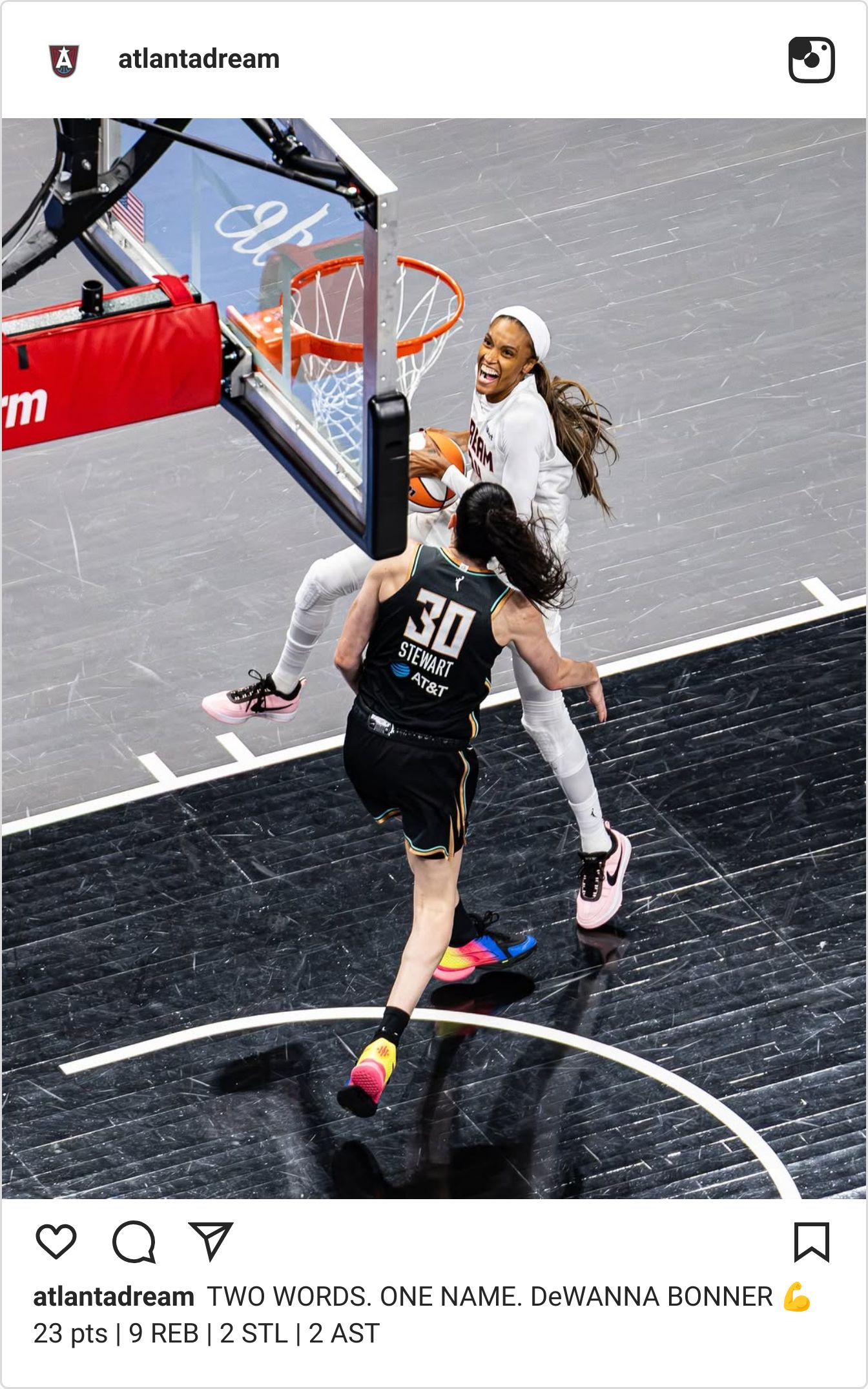
The Dream haven’t needed Bonner to be an elite starter or a major minute getter. More than anything, it’s seemed as though Karl Smesko has really leaned on her defensive versatility, employing her on all sorts of wild playoff assignments. I mean, realistically putting a wiry 39 year old on Shakira Austin shouldn’t work! And yet, it completely swung Game One of the first round to Atlanta. Along with Angel Reese, the Dream are turning defense into offense, forcing turnover after turnover and winning the transition game.
The minutes aren’t gaudy, nor is the shot selection. Smesko advocates for his players to engage in ‘precision strikes’, overwhelming the opponent and finding the open look with as little superfluous movement as possible. To that end, her experience and intensity has been exactly what the team has needed. Especially Angel Reese, who is in her first true deep playoff run as a pro. Allisha Gray and Rhyne Howard, talented as they are, aren’t vocal leaders and it can’t all fall to Jordin Canada. Bonner, a two-time champion and one of the WNBA’s all-time leading scorers, has the gravitas and pedigree to jump on a team that she’s only been on for a couple months at halftime and have her words resonate.
If a title is in Atlanta’s future, the move for Bonner will be the pivotal moment of the future documentary. You can count on that.
5. The Indiana Fever Are At An Organizational Crossroads
Alright, let’s talk about this messy ass franchise.
For those that have read my work for a long time, you’d know that nothing grinds my gears quite like an emotional and non-pragmatic organization. The Chicago Sky have frequently been in my crosshairs but the Fever are quickly jumping the line as a paragon of dysfunction in the WNBA.
Before I go any further, I want to stress to every Fever fan that is reading this…
I understand that there’s many of you out there who just enjoy basketball, or enjoy Caitlin Clark or Aliyah Boston or Kelsey Mitchell. It doesn’t feel good to be made to feel embarrassed or ashamed to be a fan of a team or player. The first impulse, understandably, might be exhaustion that this dialogue persists. The second impulse might be defensiveness, also understandable. To have your values and integrity questioned because of the most fringe elements of the fanbase is likely frustrating at best, maddening at worst.
Here’s the thing: none of this has to do with you, if you believe in yourself and what you stand for. Tiring as it may be, this part of the column isn’t to excoriate you or make you feel bad about your fandom.
This is about the Indiana Fever as an organization and the bad-faith fanbase that they court who make you and those of upstanding values look bad and often guilty by association.
So let’s take it back to Game Two in Gainbridge last week.
Do I think A’ja Wilson overreacted to a fan pointing at her and appearing to lean forward from the baseline? Yes. It struck me in a similar way to when Russell Westbrook would try to get fans thrown out of arenas for calling him ‘Westbrick’. Good natured heckling is a part of the game, and I don’t think it’s possible to police that out of the game.
But here’s where I get it wrong, and where you might too.
It has nothing to do with that interaction.
In essence, this is a complete and total breakdown of trust from a non-insignificant amount of the WNBA’s player base and the Indiana Fever (and by extension, the WNBA itself). Think of it this way…
You’re a Black woman in the WNBA, or a queer woman in the WNBA. Your DM’s are flooded with messages, sometimes slurs or worse. Sometimes it’s a fan with their actual name attached to their profile. Other times it’s a name and a bunch of numbers. But there doesn’t appear to be much of a way to stifle that torrent of hate speech unless you either log off completely or ignore it. I can’t speak for anyone else, but I get furious when someone acts smarmy in my mentions. I can’t imagine how I’d be feeling getting something even more pointed, personal and numerous in nature. And, worst of all, it doesn’t feel like the league or the franchise that appears to court those “fans” have any desire to stop it.
So, human nature takes over. A player may walk into Gainbridge Fieldhouse already feeling on edge. Without any type of trust that the people behind that vitriol have been disciplined or at least forced to be away from the games themselves, I can see how it easy it can become to assume that the faces in the crowd are the same ones uttering the worst invective.
The game begins, and frustrations may happen. Bad calls, the Fever might be winning, the attitude and edge might be there. And suddenly, the faces in the crowd become even more indistinguishable from those online. What appear to be routine heckles feel more coded in nature. The dam breaks, and we have situations like Game Two.
Whether the Fever faithful, or Caitlin Clark, or Amber Cox or Kelly Krauskopf want to admit it, perception has now become reality in the WNBA. More and more players are alluding to this type of discomfort with regards to Indiana, be it in the arena itself or otherwise. And while we haven’t seen a cut-and-dried situation of a fan in the Fieldhouse crossing that line into uttering a slur within earshot of a player, sometimes that isn’t required.
What has long been considered an online problem is now a real one. Players talk, as do their agents. While Amber Cox is unwilling to even infer that some factions of her fanbase aren’t there for the right reasons, and Sophie Cunningham is fanning the flames in the pursuit of a post-playing media career on FOX News, and the organization won’t publicly distance themselves from perpetual shit-stirrers like Enes Kanter and Royce White, the rest of the league seems to be looking at the circus and going, “you couldn’t pay me enough to deal with that.”
On a parallel track, players like Kelsey Mitchell have to deal with those same factions diminishing her play while, on the other end of the spectrum, she has her Blackness questioned by virtue of her participation in the franchise. Regardless of which side is perceived to be right or wrong, it’s a very human feeling to probably be exhausted and just want to walk away from it entirely.
And that’s why this is no longer an online issue. This is a basketball issue. A roster construction issue. If word is out around the league that the Fever — not specifically Clark but Cox, Krauskopf and their inexplicable loyalty to a bench player who has done nothing but milk their franchise superstar for clout and celebrity — are either uncaring about these issues (or worse, buying into the culture war of it all), then that limits your ability to put stars around Clark and Aliyah Boston. Which can potentially cost you someone as generationally talented as Clark.
The superstar guard’s brand has taken a hit in the last few years via a bit of guilt-by-association. And while there’s nothing I’ve seen that would make me feel like she’s in the same camp as someone like Cunningham, one has to wonder how much longer Clark is willing to put up with this as well.
The way I see it, there are three required steps needed here. Number one, work with the WNBA to identify online agitators (those doing things like throwing slurs at players) and put them on something of a ‘no-fly list’ at Gainbridge. It may seem cosmetic in nature, but you have to at least try to build back trust that the fans online aren’t the fans in person. Number two, you cannot justify allowing Cunningham to hang around. Beyond the constant attention-seeking and negative spotlight she puts on the organization, she simply isn’t good enough to justify the headache. Number three, bring all the darkness into the light. Former players like Brianna Turner are openly accusing the franchise of muzzling their own athletes who had misgivings about their own fanbase. Show the receipts. Name and shame. Get those folks out of the paint the way Chelsea Gray and the Aces did when that degenerate gambler called her a slur in the DM.
We’ve crossed the proverbial Rubicon and if Indiana isn’t going to part ways with Cox, Krauskopf and the rest of the Lin Dunn sphere of influence that have allowed this madness to go on for far too long, then they have to live with the consequences of potentially fumbling one of the most talented players the WNBA has ever seen, either by allowing her to leave or wasting her potential by toxifying your own team facility.
In Our Hoop Community
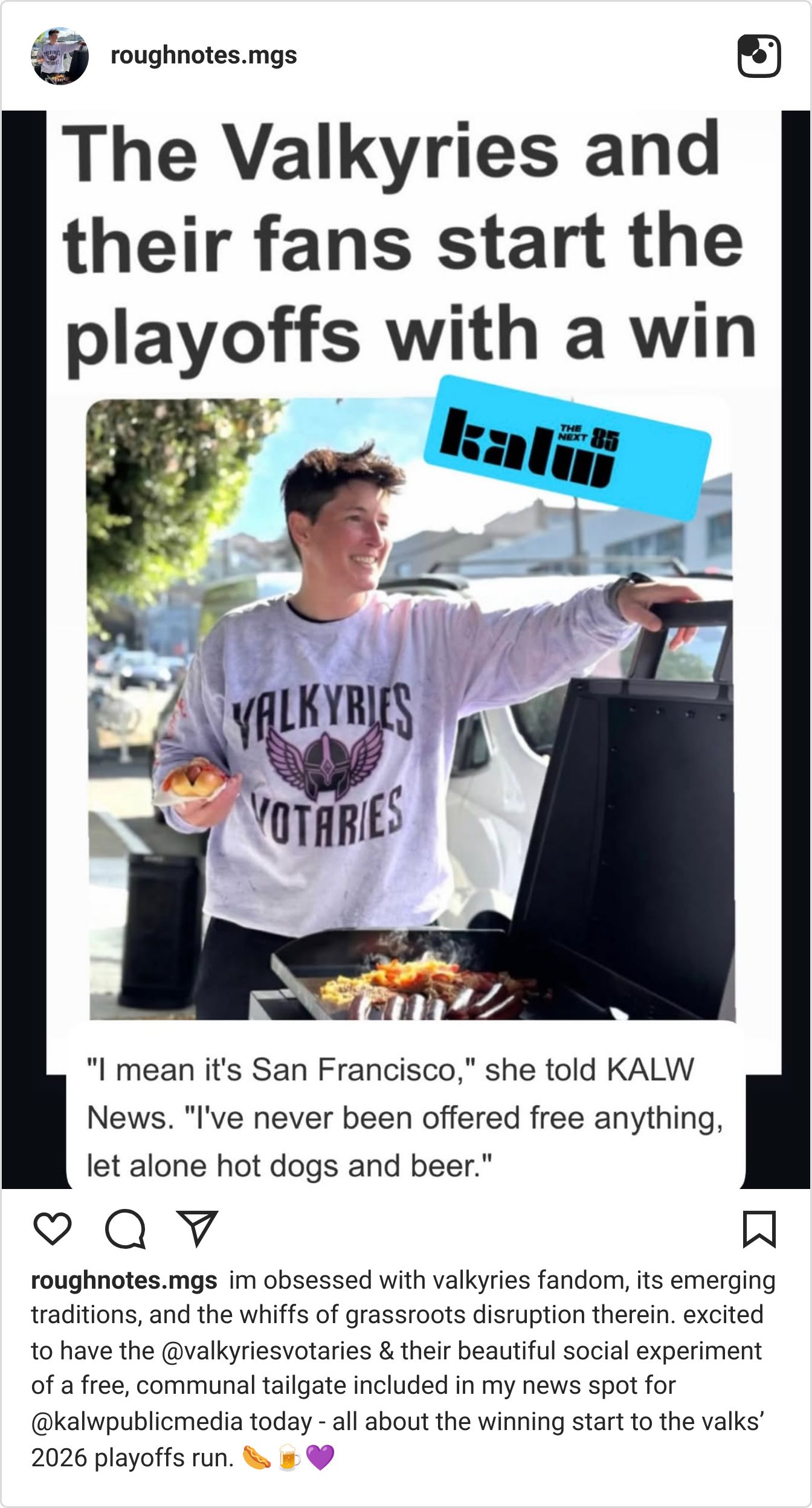
Our friend Maya Goldberg-Safir mentioned this on our Ball-Knowers Flash Pod last week but what a cool little grassroots expression of fandom in the Bay Area. City tailgates just because. You love to see it.
Good Reads, Curated By Us…
New York Liberty say they ‘need to be more prepared’ after falling in game 1 of the semifinals to the Dream by Jackie Powell, The IX Sports
Veronica Burton is the Valkyries' irreplaceable deciding factor by Madisyn Cunningham, High Post Hoops
New Sparks GM’s introductory presser leaves more questions than answers by Justin Russo, RussoWrites
Nigerian connection runs through Mystics rise as Kiki Iriafen breaks out in playoff run by Colin Udoh, ESPN

